jainssinternational@gmail.com - GST NO. : 19ACTFS5720J1ZG
- Send Email
Certification & Regulatory Consultancy Services
Leading of BIS Certification Consultancy Service, CDSCO Compliance & Registration Service, Certificate OF Origin Service and ISO Certification Consultancy Service from Kolkata.
Importance:
The Bureau of Indian Standards (BIS) is India’s national standards body, ensuring that products meet prescribed safety, quality, and reliability requirements. BIS certification is often mandatory for certain product categories sold in India.
Benefits
- Legal approval for manufacturing, import, and sale in India
- Enhanced brand credibility and consumer trust
- Access to government tenders and bulk orders
- Protection against penalties, product seizures, or bans
- Competitive advantage over uncertified products
Why It Is Required
- Many products (like electronics, steel, cement, food items, household goods) must comply with mandatory BIS standards.
- Non-compliance can lead to import restrictions, heavy fines, or product recalls.
- Foreign manufacturers require FMCS certification to legally sell in India.
Types of BIS Certification
1. ISI Certification (Indian Standards Institute Mark)
The ISI Mark is one of the most recognized quality marks in India. It assures consumers that the product meets the Indian standards of safety and performance.
- Applicable for: Cement, steel, household appliances, packaged water, and many other products.
- Benefits: Builds consumer trust, improves market reach, and avoids legal penalties.
2. CRS Certification (Compulsory Registration Scheme)
The CRS Certification is mandatory for electronic and IT goods before they can be sold in India. Introduced by the Ministry of Electronics and IT (MeitY), it ensures that these products meet safety standards.
- Applicable for: Mobile phones, laptops, LED lights, printers, batteries, smart cards, and more.
- Benefits: Ensures safe electronic goods, prevents entry of substandard imports, and increases brand credibility.
3. FMCS Certification (Foreign Manufacturers Certification Scheme)
The FMCS Certification is meant for foreign manufacturers who want to export their products to India. It requires the manufacturer to comply with Indian standards and allows them to use the BIS standard mark.
- Applicable for: Products manufactured outside India but falling under mandatory BIS standards.
- Benefits: Legal entry into the Indian market, higher consumer trust, and improved competitiveness.
Who Should Get It
- Manufacturers of mandatory listed products (domestic & international)
- Importers & Traders wanting to distribute foreign products in India
- Overseas brands entering the Indian market (through FMCS)
- Companies in regulated sectors such as electronics, construction, consumer goods, and chemicals
Why Choose SKJ Business Solutions LLP for BIS Certification?
- Trusted Experience – Decades of expertise in handling BIS and DGFT-related compliances.
- Customized Solutions – Tailored consultancy for Indian and foreign businesses.
- End-to-End Support – From documentation to final approval.
- Proven Success – Numerous clients across industries successfully certified.
- Global Reach – Assistance for both domestic manufacturers and foreign exporters.
Importance:
The Central Drugs Standard Control Organization (CDSCO) regulates drugs, cosmetics, and medical devices in India to ensure safety, efficacy, and quality. Any company dealing in these products must obtain CDSCO approval before marketing in India.
Benefits
- Legal right to manufacture, import, and sell in India
- Builds consumer and healthcare provider trust
- Reduces regulatory risks, seizures, or bans
- Strengthens global credibility for exports
- Ensures alignment with Good Manufacturing Practices (GMP)
Categories of CDSCO Registration
1. Drugs & Pharmaceuticals
Manufacturers or importers of drugs must obtain approval for new drugs, formulations, or bulk drugs. CDSCO regulates:
- New Drug Approval (NDA)
- Clinical trial approvals
- Import and manufacturing licenses
2. Medical Devices
- India has classified medical devices into four categories (A, B, C, D) based on risk. CDSCO registration is mandatory for both domestic and foreign manufacturers.
3. Cosmetics
- Cosmetic importers and manufacturers require registration under CDSCO before launching products in India.
4. Clinical Trials
- Any company or research institution conducting clinical trials in India must secure prior approval from CDSCO.
Why It Is Required?
- CDSCO approval is mandatory under Indian law for drugs, cosmetics, and all medical devices.
- Without registration, products cannot be marketed in India.
- Ensures that only safe and effective products reach consumers and patients.
Who Should Get It?
- Pharmaceutical companies (domestic & foreign)
- Cosmetic brands (skin care, hair care, personal care, etc.)
- Medical device manufacturers (from syringes to complex machines)
- Importers & distributors seeking to bring international products into India
How SKJ Business Solutions LLP Helps
At SKJ Business Solutions LLP, we provide end-to-end CDSCO Compliance & Registration consultancy for Indian and foreign companies.
Our services include:
- Guidance on product classification and applicable CDSCO norms
- Documentation support for drugs, medical devices, and cosmetics
- Assistance with online application filing through the SUGAM portal
- Liaison with CDSCO authorities for faster approvals
- End-to-end compliance management for Indian and foreign businesses
- Post-approval compliance and renewal support
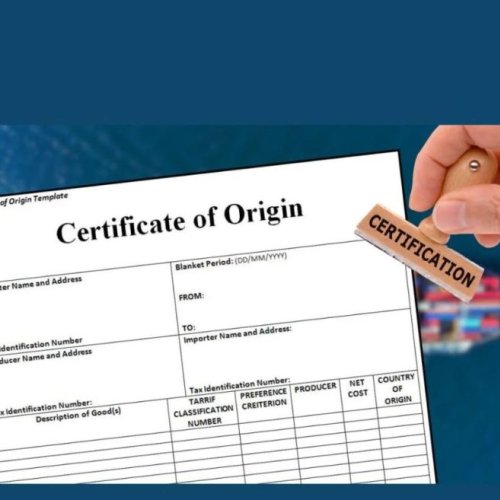
Certificate of Origin (COO) – A Complete Guide for Exporters
In the world of international trade, the Certificate of Origin (COO) plays a vital role in ensuring smooth cross-border transactions. It is an essential trade document that certifies the origin of goods being exported, confirming the country in which they were manufactured or produced. Whether you are an established exporter or just entering the global market, understanding the COO process is crucial for compliance and hassle-free trade.
What is a Certificate of Origin?
A Certificate of Origin is an official document used in international trade to declare that the goods in a shipment are wholly obtained, produced, manufactured, or processed in a particular country.
It is a mandatory requirement in many countries for customs clearance and determines the tariff rates, trade benefits, or restrictions applicable to your goods.
There are two primary types of Certificates of Origin:
- Non-Preferential COO: Declares the origin of goods without providing any trade benefits or tariff reductions.
- Preferential COO: Certifies origin under a trade agreement, allowing the importer to claim tariff concessions.
Importance of a Certificate of Origin in International Trade
The COO is more than just a piece of paper—it is a proof of authenticity in global commerce. It helps:
- Facilitate Customs Clearance: Customs authorities use it to determine applicable duties and taxes.
- Access Trade Benefits: When covered under Free Trade Agreements (FTA) or Preferential Trade Agreements (PTA), it allows reduced or zero tariffs.
- Build Credibility: Enhances trust between trading partners and ensures compliance with importing country regulations.
- Prevent Trade Disputes: Accurate certification reduces the risk of shipment delays and legal complications.
Who Issues the Certificate of Origin?
In India, the COO is issued by authorized bodies such as:
- Export Promotion Councils (EPCs)
- Chambers of Commerce & Industry
- Directorate General of Foreign Trade (DGFT) authorized agencies
The choice of issuing authority depends on the type of COO required and the destination country.
Documents Required for a Certificate of Origin
When applying for a COO, exporters typically need to submit:
- Commercial Invoice
- Packing List
- Bill of Lading / Airway Bill
- Export Declaration Form
- Manufacturing Proof or Process Details
These documents ensure transparency and verify the authenticity of the goods’ origin.
How to Apply for a Certificate of Origin
- Determine the Type: Identify whether you require a Preferential or Non-Preferential COO based on your trade agreement.
- Prepare Documents: Collect all necessary export documentation.
- Submit Application: Apply online through DGFT’s e-COO platform or offline via authorized agencies.
- Verification: The issuing authority checks and verifies all details.
- Issuance: The COO is issued, usually in both physical and digital formats.
Digital Certificate of Origin (e-COO)
The e-COO system introduced by DGFT has simplified the process, enabling exporters to apply, verify, and receive COOs online. Benefits of e-COO include:
- Faster processing
- Reduced paperwork
- Easy verification by customs authorities
- Improved security and authenticity
Role of SKJ Business Solutions LLP in COO Services
At SKJ Business Solutions LLP, we specialize in helping exporters obtain Certificates of Origin quickly and efficiently. Our team ensures:
- Correct document preparation
- Guidance on trade agreements for tariff benefits
- Hassle-free application through DGFT or authorized agencies
- Complete compliance with customs requirements
With our expertise in Foreign Trade Consulting and over four decades of industry knowledge, we help you avoid delays, reduce costs, and streamline your export documentation process.
Common Challenges in Getting a Certificate of Origin
Exporters often face issues such as:
- Incorrect HS Code classification
- Mismatch in invoice and shipping documents
- Delays due to incomplete paperwork
- Misunderstanding between Preferential and Non-Preferential COO requirements
Conclusion
The Certificate of Origin is a crucial export document that can make or break an international transaction. Whether you are shipping textiles, machinery, chemicals, or any other product, ensuring a correctly issued COO can save you time, money, and stress. Partnering with professionals like SKJ Business Solutions LLP ensures that your documentation is always accurate, compliant, and optimized for global trade benefits. Contact Us
Importance:
The International Organization for Standardization (ISO) issues globally recognized standards that improve operational efficiency, safety, quality, and compliance. ISO certifications are trusted worldwide and often required for business partnerships, tenders, and exports.
Benefits
- Enhances credibility with clients and stakeholders
- Ensures consistent quality and operational excellence
- Reduces risks and improves safety/environmental performance
- Opens doors to global markets and partnerships
- Increases chances of winning government & corporate tenders
Why It Is Required?
- ISO certifications demonstrate that your company follows globally recognized best practices.
- Many industries require ISO certification for compliance and supply chain approvals.
- It is often a prerequisite for exporting, government contracts, or B2B collaborations.
Who Should Get It?
- Manufacturers & exporters seeking international market access
- Corporates & SMEs improving process efficiency and reputation
- Educational institutions (ISO 21001)
- IT companies (ISO 20000, ISO 27001)
- Healthcare & medical device companies (ISO 13485)
- Food businesses (ISO 22000)
- Organizations aiming for quality, safety, and sustainability leadership
Individual ISO Certifications Breakdown
- ISO 9001 – For all organizations; proves commitment to quality & customer satisfaction
- ISO 14001 – For environmentally responsible companies; reduces environmental risks
- ISO 45001 – For industries with workplace hazards; ensures occupational health & safety
- ISO 50001 – For energy-intensive businesses; improves energy efficiency & cost savings
- ISO 22000 – For food businesses; ensures global food safety compliance
- ISO 20000 – For IT service providers; ensures reliable & consistent IT services
- ISO 13485 – For medical device companies; mandatory in many regulated markets
- ISO 27001 – For IT, banking, and data-sensitive businesses; ensures cybersecurity & data protection
- ISO 21001 – For schools, colleges, training institutes; ensures quality in education delivery
